

I just think this whole practice is slightly ironic, considering many of the things that we have talked about in this class so far this semester. Social discrimination can always, at some point, be watered down to Darwinism in its most basic form. We are animals just like the animals of nature. The narrator's mother in Black Beauty shows a recognition of this class distinction by telling her son that his is "well-bred", noting that he is better off than the cart-horse colts. We read about things like this ALL the time in our Lit-Classics classes. Voltaire's Candide comes to mind, as well every other book that I have ever read, including Harry Potter, The Hobbit, and James Patterson's abysmally written murder mysteries (if you can call them that). My point is this: animals seem to experience the same kind of class distinction that we are so obsessed with as humans.
Another interesting concept that Sewell introduces into her novel is that of India's caste system. If you are interested in the caste system at all but do not know much about it, I strongly urge you to do an hour or two of independent research and NOT to enroll yourself in a Senior Seminar course entitled Indian Literature: Slumdogs and Millionaires. It will drain you. But I digress-in chapter two of Black Beauty, the narrator's mother again gives insightful commentary on the place or, in(dian) our terms...caste, of horses.
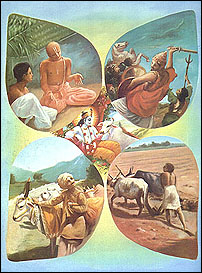
The horses have all just witnessed a rabbit chase in which one of the riders has apparently broken his neck. "But though I am an old horse, and have seen and heard a great deal, I never yet could make out why men are so fond of this sport. They often hurt themselves, often spoil good horses, and tear up the fields, and all for a hare, or a fox, or a deer, that they could get more easily some other way. However, we are only horses and don't know" (Chapter 2). The place of the horse, according to the horse (or Sewell?) is a servant. The narrator's mother recognizes that the horses are subordinate to the humans. Obviously, there is no way to understand what is actually going on in a horses mind, but this is a pretty common concept when it comes to portraying animals in books (especially talking animals). We like to tell ourselves that horses want to be our servants, or that pigeons want to deliver messages for us (if pigeon carriers were popular, I might be guilty of animal exploitation...). This is just another random example of animal exploitation! Woohoo! Go team!
The (abrupt) end!

No comments:
Post a Comment