Monday, May 3, 2010

Si se puede!

I have never actually read the Jungle Book in its' entirety before (seen the movie..), but I really felt like the first chapter discusses a really interesting idea. Was man meant to live in nature (as opposed to separately from it). Mowgli finds himself as a child, adopted by a pack of wolves. Baloo and Bagheera both take him under their wing and teach him the ways of the Jungle. Shere Kahn, however, manages to turn the Jungle against Mowgli, and does everything in his power to kill him. During a meeting with Bagheera towards the end of the chapter, Mowgli expresses his concern: "And what is a man that he should not run with his borthers?...I was born in the jungle. I have obeyed the Law of the Jungle, and there is no wolf of ours from whose paws I have not pulled a thorn. Surely they are my brothers!" (870) Mowgli finds himself in an awkward social situation. He is innocent in every way, yet he still faces persecution because of his background. I feel like you could pretty easily discuss this from a speciest approach, but I want to look (briefly) at whether or not you can expect to live harmoniously with nature. I feel like nature is a beautiful, spiritual, and personal thing for everyone. It is also the most dangerous and risky place for a human to exist. The only environment more dangerous than nature itself is the city. It is almost as if an invisible barrier exists between human culture and natural culture. Over the years, we have become so removed from nature that it has become absolutely foreign to us.


Not only is foreign and dangerous to us, but we are the same for it. As a whole, we always seem to be harming nature in some way. In the Jungle Book, Bagheera confides to Mowgli that he used to be a caged cat. In the white seal, we see another negative effect of humanity on nature: "Yet Seat Catch never chased a beaten sea, for that was against the Rules of the Beach" (878). I feel like most people have a firm grasp on this idea that humans tend to be bad for animals. I grew up in seeing pictures of oil-drenched birds, road-kill, and animals with those can-holders stuck around their necks. It is a sad truth, but half of changing is knowing.


THE END#

Wednesday, April 28, 2010

[Revised[ Lesson Plan for 4-29

Main idea: I want to take a look at the differences between healthy sympathy, and unhealthy sympathy.

If we have time, there are two activities that I would like to do. Firstly, I'd like to read off a few quotes from the DB's that are in so far, and maybe discuss some of the themes that are surfacing (strength's of Poetry as a vehicle for sympathetic imagination, and the validity of some of the views that the poems take themselves.)

After this, I want to do a brief poetry-writing exercise that will allow us to both use creative writing as a means of sympathetic imagination, as well as to experience the degree of difficulty that goes into writing meaningful poetry. Basically, I'll come prepared with a couple scenarios that will serve as the basic premise of the poem (probably two or three). After all the short poems have been written, we'll collect them, mix them up, pass them out, and then read them.

Then, if we still have time, we can discuss individual poems and the effect that they have on us as listeners.

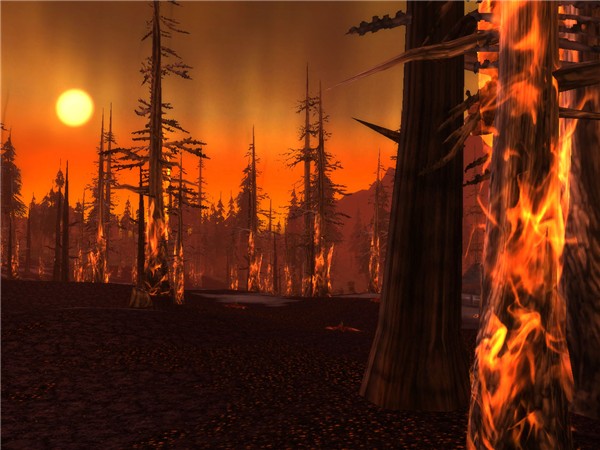
Dangeresque 4: Look out! There is fire on that tree!

Gerard Hopkins' poem "The Windhover" beautifully describes the majestic flight of a falcon as is glides through the air. Hopkins relies strongly on his firm grasp over colorful imagery and description to emotionally guide his audience to sympathize with the scene."Brute beauty and valour and act, oh, air, pride, plume, here buckle! And the fire that breaks from thee then, a billion times told lovelier, more dangerous, O my chevalier!" (841). After reading this, I pretty much wanted to magically transform into a falcon so that I could go fly around and experience this all for myself first-hand. This raises the question, however, of animal cognition. Humans seem to all be obsessed with the nobility of nature. For example, we are awestruck by things like Eagles, Cheetahs, and whales. Something about their behavior strikes us as enchanting and majestic. The question is, however, are animals aware of their own beauty and grace? We know that they are capable of assessing their own skill sets versus the skill sets of other animals, but can they appreciate the aesthetic quality of their grace and appearance? There really isn't any way to tell, but I'm glad that I am able to observe and comprehend how awesome nature is.


On a similar note, something I read from the packet made me question the way I appreciate and understand nature on a daily basis. "Earlier in the century Thoreau had written, 'Sympathy with the fluttering alder and poplar leaves almost takes away my breath... if any part of the forest was burned... I grieved with a grief that lasted longer and was more inconsolable than that of the proprietors" (848). In other words, Thoreau sympathized with ALL nature. He appreciated it, and felt for it. He went so far as to grieve for the burning forest. Being in nature affected the way that he lived out his life. Is this healthy? It is one thing to act in a way that is healthy for both yourself and your environment, but it is something else entirely to be so caught up in nature that it starts to take a toll on yourself as a person. In Thomas Hardy's Jude the Obscure, we see a similar sentiment: "This weakness of character, as it may be called, suggested that he was the sort of man who was born to ache a good deal before the fall of the curtain upon his unnecessary life should signify that all was well with him again" (861). At what point does a sympathetic approach towards nature become dangerous? There are certain things that are easy and healthy to sympathize with, such as stray animals, or farm animals, or anything like that. If I become some consumed with nature that it starts consuming me, however, it gets dangerous. It is important to remember that it is impossible to drift through life as a ghost, without having any affect on our surroundings at all. We must pick and choose our battles. This is my belief, anyways...

Monday, April 26, 2010

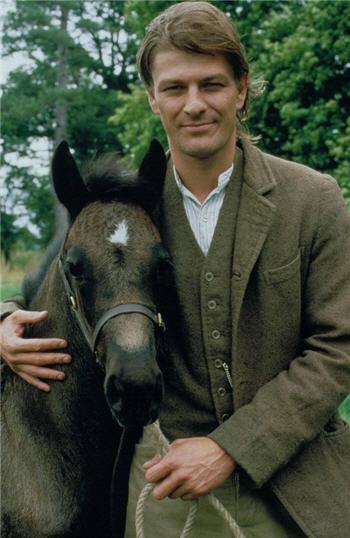
Keanu Reeves and Alex Winters. Oh- and is that Boromir?


Probably my favorite part of Black Beauty comes late in the novel with our favorite hoofed narrator finds himself in the care of Jerry Barker, a london cab driver. Jerry is depicted as a sort of beautifully ethical, simple-minded man. He cares for others just about as much as he does for himself, and he is careful not to get caught up in the trends of the world. Jerry also shows unabashed affection and care (I can't stop saying this word) for Jack (the narrator). The most interesting part of this section of the novel for me came as Jerry and some of the other drivers quickly discuss religion and ethics. ""There is no religion without love, and people may talk as much as they like about their religion, but if it does not teach them to be good and kind to man and beast it is all a sham . . . " (Chapter?). I cannot possibly vocalize how much I agree with this statement. I don't necessarily think that this sentiment should be applied specifically to religions, but rather to just life in general. If Jerry is capable of figuring out that religion should benefit both man and beast, then we as humans should be capable of living our lives in such a way that they benefit other humans and animals.


First of all, there is no religion without love. I absolutely love this. One of my favorite quotes of all-time that sum's up the central message of Christianity was said by Napoleon Bonaparte (the "short, dead dude". Great Movie...). It goes: ""I know men and I tell you that Jesus Christ is no mere man. Between him and every other person in the world there is no possible term of comparison. Alexander, Caesar, Charlemagne, and I founded empires. But on what did we rest the creations of our genius? Upon force. Jesus Christ founded His empire upon love; and at this hour millions of people would die for Him." This is so telling of what the religion was originally founded on, and how far modern-day "Christians" have strayed from this message. I feel like Jerry does an excellent Job of living his life in a way that emanates love, not only to his fellow man, but also to his animals.

The (abrupt)
End.

Wednesday, April 21, 2010

Stereotypes: Steam Engines and (subtly) KFC

Black Beauty by Anna Sewell brings to light another pretty important issue when it comes to animals and our understanding of them. "They always seemed to think that a horse was something like a steam engine, only smaller" (Chapter 29). I am about to take this completely out of context, but I think it is interesting enough of a truth that it doesn't really matter at all. Earlier today at lunch I was talking to a couple of my friends about stereotyping. One of my friends, Abby, said something like "Stereotyping and labeling are necessary to everyday life. I can't not label people." I'm talking mainly about the common racial stereotypes that we are all so familiar with, such as "black people are great at basketball", or "Asians are the best studiers", or "Mexicans are hard workers." These observations are obviously not always true, and many times they are the cause of great offense, but I want to take a quick look at how we apply these same labeling tactics to animals.


When we talk about animals, we always have these subconscious images associated with them. This goes back a little bit to my entry on animals and languages, but I think it goes a little deeper than that. We, as humans, are constantly associating ourselves with things, and then associating those things with other things. For example, I have a good friend who is obsessed with being as sneaky and stealthy as possible. By this point, I have associated her with a cat, because she is always prowling around. Give it two years, and there is a chance that when I hear her name I immediately think "cat!". If you ask me right now what I think of when I think cats, however, I'll probably rattle off a list of their different aspects: mysterious, sleepy, sly, affectionate...all of these things.


In black beauty, we see a horse become associated with a "steam-engine". What characteristics do steam engines display? They are mechanic, durable, strong, and relentless. When a horse in the book becomes labeled as a steam-engine, the driver sub-consciously assigns these attributes to that particular horse. He is made to become a machine. The driver abandons all sense of compassion and sympathetic imagination.


My point in this post is not argue that comparative organization is bad, because I strongly feel like it is a fun and useful linguistic tool (and I think you could argue that it is how we are wired as humans), but I feel like it is absolutely necessary that we remain aware that each individual, whether it be animal or human) is a stand-alone being. A horse is a horse, not a train. My friend is an individual, not a cat.

The end.

Monday, April 19, 2010

Harry Potter, Horses, and the Indian Caste System

Anne Sewell's Black Beauty brings up a couple of interesting issues when it comes to animals and animal behavior in the wild. In chapter one, in the opening pages of the story, the narrator recounts a time when his mother sat him down and explained to him his brief history and his presumed future. "I wish you to pay attention to what I am going to say to you. The colts who live here are cart-horse colts, and of course, they have not learned manners. You have been well-born and well-bred. Your father has a great name in these parts, and your grandfather won the cup two years at the Newmarket races. Your grandmother had the sweetest temper of any horse I ever knew, and I think you have never seen me kick or bite. I think you will grow up gentle and good, and never learn bad ways" (Chapter 1). This concept of bloodline and ancestry when it comes to animals brings to mind the way that we value animals that we ourselves own. When someone buys a show dog or horse, they always want to see its pedigree. Traits are inherited, many times- not learnt. This value (assigned extrinsically) reflects an intrinsic discrimination that we see in all animals. If there are two "laws of life" that we see in animals (namely wild animals) they are undoubtedly to SURVIVE and to PROCREATE. Animals live their lives eating or mating. Many species of animals seem to order their lives around only these two things. If you turn your TV to some sort of animal-related channel, you'll will probably hear or see information about animal behavior regarding these two things. The interesting thing about the procreation part (as far as I'm concerned) is the methods in which many animals choose mating partners. In some species, such as fish, there isn't much order involved at all. In others, however, such as the birds of paradise of New Guinea, partner selection is a process involving plenty of competition, broken hearts, and discrimination. Females, such as the birds of paradise, always chose male partners that they think will give their off spring the most useful genes. In other words, they discriminate against the weak.


I just think this whole practice is slightly ironic, considering many of the things that we have talked about in this class so far this semester. Social discrimination can always, at some point, be watered down to Darwinism in its most basic form. We are animals just like the animals of nature. The narrator's mother in Black Beauty shows a recognition of this class distinction by telling her son that his is "well-bred", noting that he is better off than the cart-horse colts. We read about things like this ALL the time in our Lit-Classics classes. Voltaire's Candide comes to mind, as well every other book that I have ever read, including Harry Potter, The Hobbit, and James Patterson's abysmally written murder mysteries (if you can call them that). My point is this: animals seem to experience the same kind of class distinction that we are so obsessed with as humans.

Another interesting concept that Sewell introduces into her novel is that of India's caste system. If you are interested in the caste system at all but do not know much about it, I strongly urge you to do an hour or two of independent research and NOT to enroll yourself in a Senior Seminar course entitled Indian Literature: Slumdogs and Millionaires. It will drain you. But I digress-in chapter two of Black Beauty, the narrator's mother again gives insightful commentary on the place or, in(dian) our terms...caste, of horses.


The horses have all just witnessed a rabbit chase in which one of the riders has apparently broken his neck. "But though I am an old horse, and have seen and heard a great deal, I never yet could make out why men are so fond of this sport. They often hurt themselves, often spoil good horses, and tear up the fields, and all for a hare, or a fox, or a deer, that they could get more easily some other way. However, we are only horses and don't know" (Chapter 2). The place of the horse, according to the horse (or Sewell?) is a servant. The narrator's mother recognizes that the horses are subordinate to the humans. Obviously, there is no way to understand what is actually going on in a horses mind, but this is a pretty common concept when it comes to portraying animals in books (especially talking animals). We like to tell ourselves that horses want to be our servants, or that pigeons want to deliver messages for us (if pigeon carriers were popular, I might be guilty of animal exploitation...). This is just another random example of animal exploitation! Woohoo! Go team!

The (abrupt) end!

Monday, April 12, 2010

Religion: Jesus, Gandhi, and Pelicans

First of all, these things just seem to get longer and longer (and inevitably more and more incoherent. And full of typos....) Sorry!

When people think of religion nowadays, they almost inevitably think of the ridiculous televangelists telling people that if they don’t donate their life-savings, they are going to die a painful death and live for eternity in hell, or of the tragically extremist approach to religion (like 9/11, or the Crusades). I feel like these understandings, while justified because of the complete abuse and exploitation of religion that goes on daily in world culture, are sadly inaccurate.

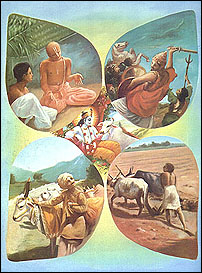
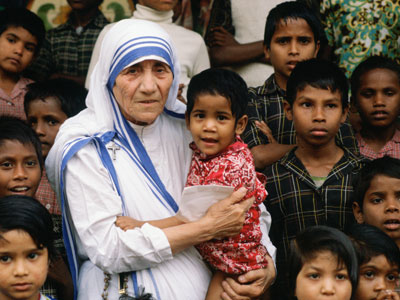
According to whoever wrote this specific passage in our course packet, “The one message of all saints and prophets of all times and climes, is the message of love, of Ahimsa, of selfless service” (815). I feel like this isn’t entirely true of all religions, but definitely of most. It definitely rings true with the central message and practice of Christianity. Aristotle (maybe it was Plato, I really can’t remember) taught that the purpose of man was to flourish, and that can only happen in a world of peace, love, and truth. You can’t flourish if kill your neighbor in order to steal his life-savings, and you definitely can’t flourish if your neighbor kills you to do the same. Instead, flourishing, in the original Greek sense, requires a sort of self-sacrifice very similar to the one that we see and hear about in Christianity. Mother Theresa is a great example of what it means to live selflessly for the well being of others. This is what my understanding of ahimsa is.


“Nonviolence, according to Gandhi, is the law of the human race and is infinitely greater than and superior to brute force…Nevertheless, ahimsa is the means; truth is the end. Means to be means must always be within our reach, and so ahimsa is our supreme duty. In its positive form, ahimsa means the largest love, greatest charity. According to Gandhi, ‘If I am a follower of ahimsa, I must love my enemy’” (821). So, if ahimsa is a means to truth and understanding (and possibly flourishing), then how can we apply that to all aspects of our lives? Gandhi says that one practical practice (socially) is to love your enemy. Gandhi was known globally for his philosophy of nonviolence when it comes to politics and social issues. Let’s take a quick look at what it means to not practice ahimsa.


If we all lived hedonistic self-serving lives, there can be no doubt that the world would be a little more chaotic than it is now. To be self-serving is to exploit the environment around you (socially, politically, and ecologically…among other things) for your own self-gain. It is reminiscent of sadism: you do what you what, when you want without any consideration for others. When it comes to food, we rarely think twice. I was brought up seeing (in school, movies, books…) Darwinism. Only the strong survive. To eat is to kill, but it is a means of living. Eating is as ironic a practice as I can think of. When you eat something (either a plant, animal, or fruit), you let it grow (while it eats…), until eventually you eat it, destroying all of the growth from the previous days, months, and sometimes years. It is a necessary process.


The idea of ahimsa would argue that while we can’t completely ignore our need to eat, we need to learn how to minimize the destruction involved in eating. “As scientist Brian Swimme has suggested, we are currently making macrophase changes to the life systems of the planet with microphase wisdom. Clearly, we need to expand and deepen the wisdom base for human intervention with nature and other humans”(811). On a daily basis, we make decisions on a “microphase level” that have drastic world-changing effects. The movie “The Butterfly Effect” effectively discusses this concept. I was watching Life last week when a segment about pelicans came on. Apparently, the mass-fishing that goes on in the oceans nowadays in order to supply fish to countries around the world has greatly reduced the population of whatever fish it is that White pelicans like to eat. Instead of moving to where there are more fish, however, the pelicans have simply changed their diet. Instead, now they have begun raiding the nests of some other ocean-dwelling bird (I can’t remember which now), and stealing/eating their young. It was shocking to me. This is just an example of how our lack of ahimsa is having a very tangible effect on our planet.