On a similar note, something I read from the packet made me question the way I appreciate and understand nature on a daily basis. "Earlier in the century Thoreau had written, 'Sympathy with the fluttering alder and poplar leaves almost takes away my breath... if any part of the forest was burned... I grieved with a grief that lasted longer and was more inconsolable than that of the proprietors" (848). In other words, Thoreau sympathized with ALL nature. He appreciated it, and felt for it. He went so far as to grieve for the burning forest. Being in nature affected the way that he lived out his life. Is this healthy? It is one thing to act in a way that is healthy for both yourself and your environment, but it is something else entirely to be so caught up in nature that it starts to take a toll on yourself as a person. In Thomas Hardy's Jude the Obscure, we see a similar sentiment: "This weakness of character, as it may be called, suggested that he was the sort of man who was born to ache a good deal before the fall of the curtain upon his unnecessary life should signify that all was well with him again" (861). At what point does a sympathetic approach towards nature become dangerous? There are certain things that are easy and healthy to sympathize with, such as stray animals, or farm animals, or anything like that. If I become some consumed with nature that it starts consuming me, however, it gets dangerous. It is important to remember that it is impossible to drift through life as a ghost, without having any affect on our surroundings at all. We must pick and choose our battles. This is my belief, anyways...
Wednesday, April 28, 2010
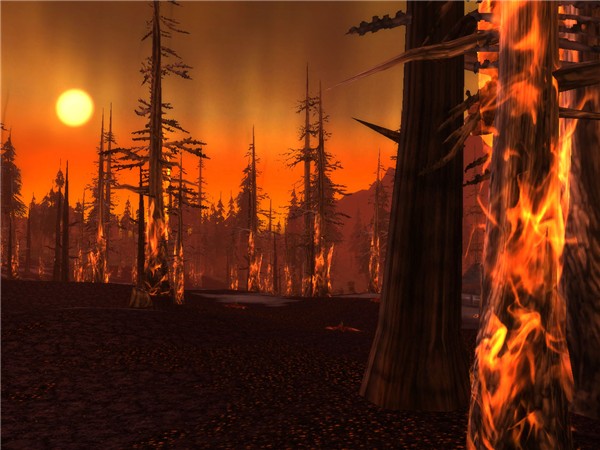
Dangeresque 4: Look out! There is fire on that tree!
Gerard Hopkins' poem "The Windhover" beautifully describes the majestic flight of a falcon as is glides through the air. Hopkins relies strongly on his firm grasp over colorful imagery and description to emotionally guide his audience to sympathize with the scene."Brute beauty and valour and act, oh, air, pride, plume, here buckle! And the fire that breaks from thee then, a billion times told lovelier, more dangerous, O my chevalier!" (841). After reading this, I pretty much wanted to magically transform into a falcon so that I could go fly around and experience this all for myself first-hand. This raises the question, however, of animal cognition. Humans seem to all be obsessed with the nobility of nature. For example, we are awestruck by things like Eagles, Cheetahs, and whales. Something about their behavior strikes us as enchanting and majestic. The question is, however, are animals aware of their own beauty and grace? We know that they are capable of assessing their own skill sets versus the skill sets of other animals, but can they appreciate the aesthetic quality of their grace and appearance? There really isn't any way to tell, but I'm glad that I am able to observe and comprehend how awesome nature is.

On a similar note, something I read from the packet made me question the way I appreciate and understand nature on a daily basis. "Earlier in the century Thoreau had written, 'Sympathy with the fluttering alder and poplar leaves almost takes away my breath... if any part of the forest was burned... I grieved with a grief that lasted longer and was more inconsolable than that of the proprietors" (848). In other words, Thoreau sympathized with ALL nature. He appreciated it, and felt for it. He went so far as to grieve for the burning forest. Being in nature affected the way that he lived out his life. Is this healthy? It is one thing to act in a way that is healthy for both yourself and your environment, but it is something else entirely to be so caught up in nature that it starts to take a toll on yourself as a person. In Thomas Hardy's Jude the Obscure, we see a similar sentiment: "This weakness of character, as it may be called, suggested that he was the sort of man who was born to ache a good deal before the fall of the curtain upon his unnecessary life should signify that all was well with him again" (861). At what point does a sympathetic approach towards nature become dangerous? There are certain things that are easy and healthy to sympathize with, such as stray animals, or farm animals, or anything like that. If I become some consumed with nature that it starts consuming me, however, it gets dangerous. It is important to remember that it is impossible to drift through life as a ghost, without having any affect on our surroundings at all. We must pick and choose our battles. This is my belief, anyways...
Subscribe to:
Post Comments (Atom)

No comments:
Post a Comment